When the Traitor is You: How Fragmented Memories are the Ultimate Legal Defence
How "amnesia" and fragmented memory play out in civil court — and why it's the hardest pleading to disprove.
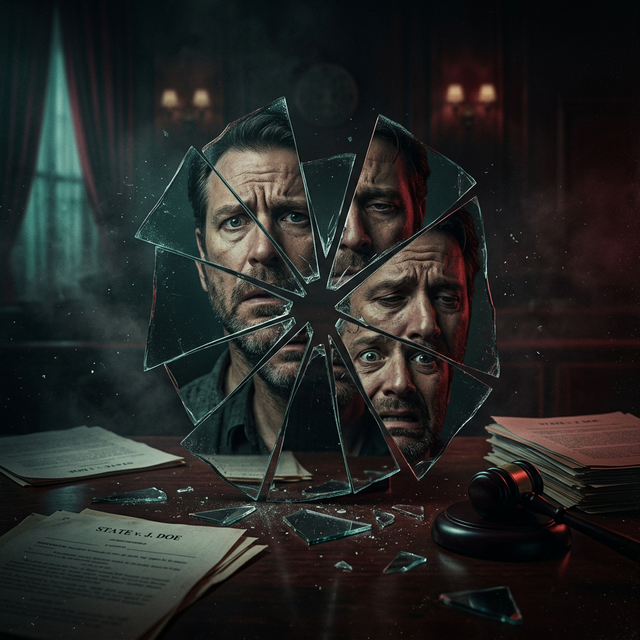
Here’s a question that should unsettle you: what happens when the liar doesn’t know they’re lying?
We’ve all seen the courtroom drama where the cunning defendant feigns amnesia — the calculated “I don’t recall” delivered with practised sincerity. But the truth is far more interesting, and far more disturbing, than fiction usually admits. Because fragmented memory isn’t always a lie. Sometimes, the mind genuinely fractures. And when it does, the legal system finds itself grappling with a defence that is almost impossible to defeat.
The “I Don’t Recall” Problem
In civil litigation, the phrase “I don’t recall” is a scalpel, not a sledgehammer. Unlike criminal court, where the burden of proof sits squarely on the prosecution, civil proceedings operate on a balance of probabilities. That means every unanswered question, every gap in testimony, shifts weight on the scales.
When a witness says “I don’t recall,” the opposing counsel faces a maddening dilemma. You can’t prove what someone remembers. You can challenge their credibility, question their motives, produce documents that suggest they should remember — but you cannot crack open their skull and inspect the contents.
This is what makes fragmented memory the ultimate shield. It doesn’t assert a counter-narrative. It doesn’t claim innocence. It simply… removes information from the playing field. And you can’t cross-examine a void.
Why Real Fragmentation is More Terrifying Than Faking It
The twist that thriller writers should pay attention to is this: genuine memory fragmentation is far more common than we’d like to believe.
Trauma, stress, substance use, even the simple passage of time — all of these can shatter a person’s recollection into disconnected shards. A witness might vividly remember the colour of the wallpaper but have no memory of signing the contract. They might recall an argument word-for-word but be unable to say what month it happened in.
This isn’t convenient amnesia. It’s how the brain actually works under duress. The hippocampus, responsible for encoding memories, is exquisitely sensitive to cortisol — the stress hormone. Flood it with enough cortisol, and the recording simply… skips. Like a vinyl record with a scratch gouged through the grooves.
In the courtroom, this creates a genuinely unsolvable problem. If the witness isn’t lying — if their memory truly is fragmented — then no amount of cross-examination will produce the truth. The information doesn’t exist in a recoverable form. It’s not hidden; it’s gone.
The Weaponisation of Gaps
Of course, where there’s a genuine phenomenon, there’s someone willing to exploit it.
Sophisticated litigants have learned that selective memory loss is remarkably difficult to distinguish from the real thing. A well-coached witness knows exactly which facts to “forget” — the ones that would be most damaging — while retaining enough peripheral detail to appear credible.
The trick is in the specificity of what’s forgotten. A genuine memory gap tends to be messy and inconsistent. A fabricated one is suspiciously clean. The real amnesiac forgets things they should remember and remembers things they reasonably might not. The faker forgets only the inconvenient facts.
Skilled litigators look for this pattern. They map the topology of the gaps, searching for the telltale signature of selective omission versus genuine fragmentation. It’s forensic work — painstaking, probabilistic, and never entirely conclusive.
The Mirror in the Courtroom
Here’s where this gets truly fascinating for a thriller writer: the moment the character begins to doubt their own memory.
What if your protagonist genuinely cannot remember whether they signed that document? What if they’re not sure whether the conversation happened the way they think it did? What if the fragmentary images that surface — a pen in their hand, a voice saying “just sign here” — might be real memories, or might be constructions built from anxiety and suggestion?
This is the richest territory for psychological fiction. The unreliable narrator isn’t just unreliable to the reader — they’re unreliable to themselves. The betrayal isn’t external. The traitor sitting at the round table is their own fractured mind.
In civil court, this plays out with devastating real-world consequences. People lose cases not because they lied, but because they genuinely couldn’t assemble their memories into a coherent account. The opposing counsel doesn’t need to prove deception — they only need to demonstrate that the witness’s account is too fragmented to be relied upon.
Writing the Fracture
If you’re writing a thriller with an unreliable narrator, study how real memory fragmentation works. Don’t give your character convenient gaps. Give them messy ones — memories that contradict each other, sensory details that float free of context, emotions that attach to the wrong events.
Have them remember the smell of rain during a meeting that took place in July. Have them recall a conversation with absolute clarity but place it on the wrong day. Have them feel certain about something they cannot possibly know.
Because the most unsettling defence isn’t “I didn’t do it.” It’s “I don’t know if I did.” And the most compelling thriller doesn’t reveal the truth at the end — it makes you wonder whether the truth was ever knowable at all.
After all, if you can’t trust your own memory, who is the real traitor?